In a paper shared online on “arXiv”, in view of forthcoming publication in a scientific journal, Manuel Zahn and Armaghan Ahmad Khan explain how the system works.
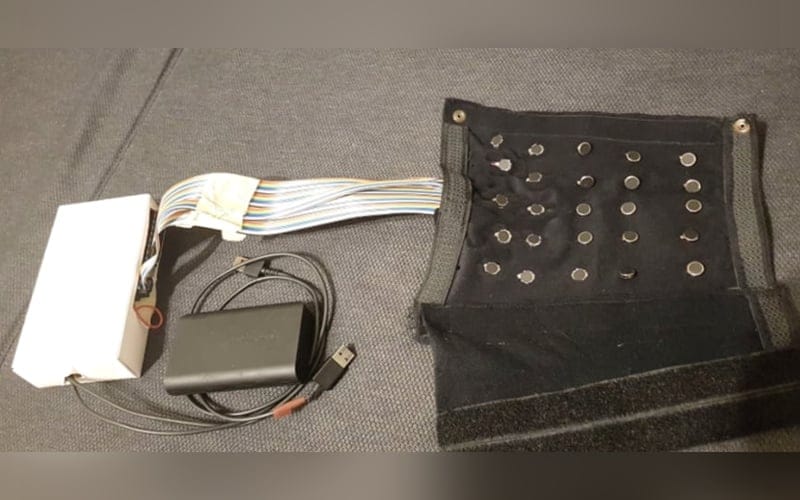
The obstacle avoidance system combines a 3D camera and a physical feedback sleeve placed on the forearm of the blind or sight-impaired person. This system works independently of lighting conditions and can be used day or night, indoors with a maximum range of 3m, or outdoors (2m).
When the camera detects an obstacle, it applies a small vibration to the forearm. The sleeve has a total of 25 small points of contact that are used to signal the presence of an obstacle by indicating its location and its distance.
During the first tests, these vibrations were correctly felt in more than 98% of cases.
Tech advances for greater autonomy
The aim of this innovation is to help visually impaired people become even more independent, as the sleeve is relatively discreet and removes any potential stigma.
The intensity of the vibration depends on the specific location of the sleeve, as well as on the muscularity of the forearm.
This project is still in the prototype stage, and further developments could include object recognition to generate perfectly delimited paths.
This system could be further enhanced with bone-conduction speakers for additional voice-based control.
Scientific progress is such that it is now possible to give visually impaired people relative autonomy, helping them get around without the traditional white cane or guide dog.
In recent years, research and innovations have multiplied, from the smart white cane to the autonomous dog robot, not to mention a tech-packed backpack and a smartphone guide.