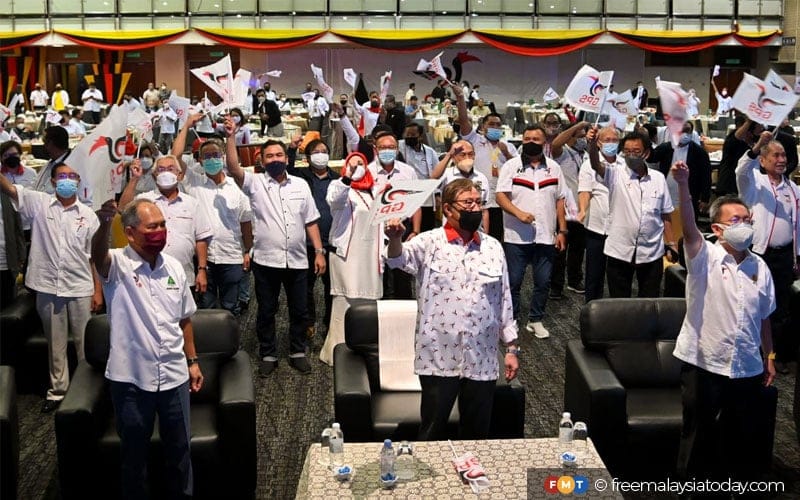
The general election on Nov 19 is the first parliamentary foray by GPS, which was formed after the breakup of Sarawak Barisan Nasional in 2018.
However, the coalition had gone into electoral battle in last year’s state elections. Led by GPS chairman Abang Johari Openg and contesting under its own banner for the first time, the coalition won 76 of the 82 state assembly seats.
As GPS prepares to take to the hustings again, interest will focus on how the other blocs will fare.
Four years ago, the GPS components were part of BN and contested using its “dacing” logo but the last state elections was proof the logo change did not matter to Sarawakian voters.
The coalition had banked on its performance in Petra Jaya and its success in regaining some of the states’ rights under the Malaysia Agreement 1963.
This included a fairer share of revenues from oil and gas resources, and the constitutional amendment that reinstated Sabah and Sarawak’s status as equal partners of the federation.
That election also saw the rise of a new state-based opposition in Parti Sarawak Bersatu led by former state minister Wong Soon Koh.
It knocked DAP off its perch as the state’s main opposition party, winning four seats compared to DAP’s two. However, the party has since been hit by a wave of defections.
The weakened opposition has observers predicting GPS will win most of the 31 parliamentary seats up for grabs. It is understood that GPS has set a target of winning at least 25 seats.
In GE14, BN won 19 seats, DAP six seats and PKR won four. The other two seats were won by independents Larry Sng (Julau) and Jugah Muyang (Lubok Antu).
Sng’s Julau seat will be among the most watched. After GE14, he joined PKR before quitting the party after the fall of the Pakatan Harapan federal government. He then founded Parti Bangsa Malaysia.
Other seats of interest include those won by PH but lost through defection including Puncak Borneo and Saratok. The Sibu seat that Wong is contesting will also be one to watch.